What Is an Unloading Conveyor and Why It Matters
An unloading conveyor is a specialized material-handling system designed to transfer goods quickly and safely from inbound vehicles—trailers, vans, or shipping containers—into a facility. Whether the operation is a fast-moving parcel hub, a cross-border logistics gateway, or a factory receiving zone, these systems streamline the first and often most chaotic step in the supply chain: getting product off the vehicle and into the workflow. By mechanizing what used to be a labor-intensive process, an unloading conveyor enhances throughput, improves ergonomics, and reduces damage to goods.
In express delivery and e-commerce fulfillment, a high percentage of receiving time is consumed by repetitive lifting and carrying. Workers step into containers, bend, twist, and walk distances, all while racing the clock. A well-designed unloading conveyor changes the equation. It brings the conveyor to the freight, not the other way around. Telescopic belts extend deep into the trailer, flexible powered conveyors snake through a busy dock, and roller lines feed sortation and scanning automatically. The result is a smoother, faster “dock-to-stock” flow with fewer touches.
The value isn’t limited to speed. Safety and quality improve in parallel. By keeping operators at ergonomic working heights and reducing manual lifts, facilities report fewer strains and repetitive-motion injuries. Fragile items are better protected by consistent transfer speeds and controlled accumulation. In cross-border logistics, where containers may arrive mixed with varied carton sizes and packaging, the ability to stabilize flow off the vehicle prevents bottlenecks downstream at induction, dimensioning, or quality-check stations.
Modern innovators in logistics equipment—particularly in regions with dense warehousing and manufacturing activity—have pushed the technology forward rapidly since the late 2010s. Solutions now integrate sensors, smart drives, and automated start/stop logic to align unloading cadence with sorter capacity. For businesses managing seasonal surges, agile systems allow a single dock to flex from low-volume receiving to peak inbound bursts without adding headcount. In short, an unloading conveyor is not just a piece of equipment; it is a strategic lever that protects labor, stabilizes flow, and unlocks consistent performance from the very first meter of material movement.
Key Designs, Features, and Selection Criteria
Choosing the right unloading conveyor begins with understanding the different configurations and the job each one is designed to do. Telescopic belt conveyors are the workhorse for unloading loose cartons from trailers and containers. Their sections extend and retract smoothly, taking the belt directly to the freight so operators can place parcels onto the moving surface with minimal reach. Many include hydraulic height adjustment to align with varying dock heights or container floors, and some add articulating noses to optimize ergonomics at the point of pick.
Flexible “accordion” conveyors, available as gravity or powered roller models, shine when layouts change frequently. They compress to save space and expand into curves to reach staging zones, scanning tunnels, or palletization cells. Powered versions handle longer runs, variable speeds, and uphill sections, while gravity options are cost-effective for short, gentle declines. For heavier or uneven loads—think totes with mechanical parts or bundles of raw materials—modular belt or chain-driven roller conveyors provide durability, positive drive, and reliable traction. Facilities unloading bulkier items may add cleated belts or side skirts to control product on steeper angles.
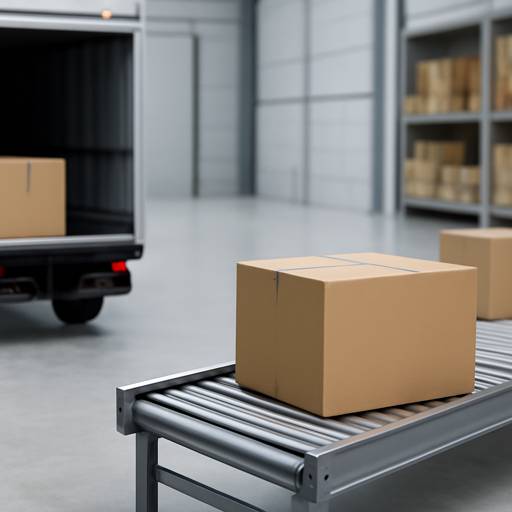
Beyond the mechanical design, smart features separate a good system from a great one. Variable-frequency drives (VFDs) allow smooth acceleration and energy efficiency. Photoelectric sensors and zone control help manage accumulation without back-pressure, reducing product damage. Integrations for barcode scanning, dimensioning, and in-motion weighing allow data capture right at receiving, eliminating a secondary induction step. Safety features—E-stops within reach, bumpers at the conveyor nose, audible/visual alerts, and anti-pinch guarding—are non-negotiable. To withstand real-world docks, look for robust frames, sealed bearings, and appropriate IP ratings for dust or humidity.
Selection criteria should map directly to your workflow and environment. Start with package profile (min/max dimensions, weight, surface type), inbound vehicle types (vans, 53’ trailers, or 40’ HQ containers), and required throughput during both average and peak shifts. Evaluate floor conditions, aisle widths, and turning radii if mobility is required. Consider the operating climate (from humid subtropics to colder seasons), power availability, and any need for battery operation during dock reconfiguration. Finally, confirm how the system will interface with your warehouse management or control software, including signals for jam detection, start/stop logic, and downstream sorter readiness. Manufacturers dedicated to R&D—particularly those focused on express, warehousing, and industrial loading/unloading—offer modular platforms that scale from a single dock to network-wide deployments. For an overview of models designed for modern logistics, explore the latest unloading conveyor solutions.
Implementation Scenarios and ROI: From Parcel Hubs to Factory Receiving
Real-world deployments demonstrate how an unloading conveyor pays off across different verticals. In a parcel hub receiving mixed e-commerce cartons, a telescopic belt paired with a powered flexible conveyor creates a continuous flow from the trailer door to the sortation infeed. Operators remain within a safe ergonomic reach, the system meters cartons to scanner capacity, and rework from mis-sorts declines because labels are read cleanly at speed. The same configuration can pivot to handle returns: with a quick re-route to an inspection cell, inbound parcels are triaged, photographed, and re-boxed without clogging the main line.
Cross-border logistics centers face unique demands: variable packaging integrity, diverse SKUs, and containerized freight that may arrive in waves. Here, extending conveyors cut dwell time at the dock, while modular roller lines feed consolidation zones by destination or compliance requirement. Adding dimensioning right at unloading helps ensure accurate cross-border documentation and billing, reducing disputes and chargebacks. For sites handling both B2B and B2C flows, zone-controlled accumulation balances the slower pace of pallet build with the faster rhythm of parcel induction.
Manufacturing and industrial receiving benefit in similar ways but with heavier items and different risk profiles. An engine components plant, for example, can use ruggedized chain-driven rollers with lift/tilt tables at the discharge end to place totes directly at work height. This setup eliminates forklift traffic inside the trailer, reduces damage to precision parts, and standardizes takt time to the assembly line. Where space is tight—urban warehouses or micro-fulfillment nodes—compact mobile conveyors fold away after use, keeping the dock clear for staging or cross-docking.
ROI typically comes from four levers: labor, safety, damage reduction, and capacity. A common scenario shows a 25–35% improvement in unload time per trailer once manual carries are replaced by powered movement. Fewer ergonomic injuries reduce lost-time incidents and overtime coverage. Consistent speeds and protective features cut carton crush and scuff rates, preserving sellable inventory. Finally, by stabilizing inbound flow, the entire downstream system—from receiving QA to putaway—operates closer to its design rate, often unlocking capacity without building new docks. In regions with intense shipping activity and rapid growth in warehousing, manufacturers with strong R&D and field experience provide tailored configurations and commissioning support that accelerate ramp-up. Over a 12–24 month horizon, these benefits compound into a compelling business case, turning a tactical purchase into a strategic advantage at the inbound door.

Casablanca native who traded civil-engineering blueprints for world travel and wordcraft. From rooftop gardens in Bogotá to fintech booms in Tallinn, Driss captures stories with cinematic verve. He photographs on 35 mm film, reads Arabic calligraphy, and never misses a Champions League kickoff.