How Celebrity Look Alike Matching Works
The technology behind identifying which public figures you resemble combines computer vision, machine learning, and large curated datasets to produce reliable matches. It begins when a user uploads a clear photo; preprocessing handles face detection, alignment, and normalization so that the face sits in a consistent pose and scale. Landmark detection pinpoints eyes, nose, mouth, and facial contours, and these reference points allow the system to crop and rotate faces for accurate comparison. Early attention to image quality improves the final result, but modern pipelines also compensate for varied lighting and angles.
After preprocessing, the core step is feature extraction. Deep convolutional neural networks convert a face into a compact vector of numbers—an embedding—that captures identity-specific traits while discarding irrelevant factors like background. These embeddings are compared against a database of celebrity embeddings using similarity metrics such as cosine similarity or Euclidean distance. Matches are ranked by closeness, and systems often return the top several candidates with confidence scores to reflect how closely a user resembles each celebrity look alike.
Large-scale services maintain detailed celebrity libraries that include multiple images per person to capture variations in expression, age, and hairstyle. Matching engines incorporate clustering and negative sampling to reduce false positives and can be fine-tuned with human feedback to improve real-world performance. Privacy and fairness are increasingly important: responsible platforms implement data minimization, secure storage, and bias mitigation so comparisons don't disproportionately favor certain demographics. If you want to explore quickly and see results, you can look like celebrities with tools that summarize confidence and show side-by-side comparisons.
Finally, interpretability matters. Good systems report similarity scores and highlight the facial regions that contributed most to the match, making the process transparent. Whether the goal is fun curiosity—finding a celebrity i look like—or more serious identity research, understanding this pipeline helps set realistic expectations about accuracy and limitations.
Why People Search for Celebrity Look Alikes and What It Reveals
Curiosity about resemblance to famous people taps into social psychology, identity, and pop culture. Seeing a visual match to a well-known actor or musician can be a playful way to express affinity, bond over shared traits, or spark conversations on social media. For many, being told they look like a celebrity is a compliment that validates perceived attractiveness or charisma. The phenomenon also fuels viral trends—users post side-by-side comparisons that invite likes and comments, often amplifying the appeal of services that surface look alikes of famous people.
Beyond entertainment, celebrity look-alike searches can have practical uses. Casting directors sometimes seek non-celebrity stand-ins who resemble a star for lighting tests or background shots. Marketers and stylists use resemblance insights to design campaigns that evoke a desired persona without licensing the celebrity’s image. Even in genealogy and heritage conversations, people explore whether ancestral features mirror famous public figures, prompting deeper reflection on family traits and ethnic markers.
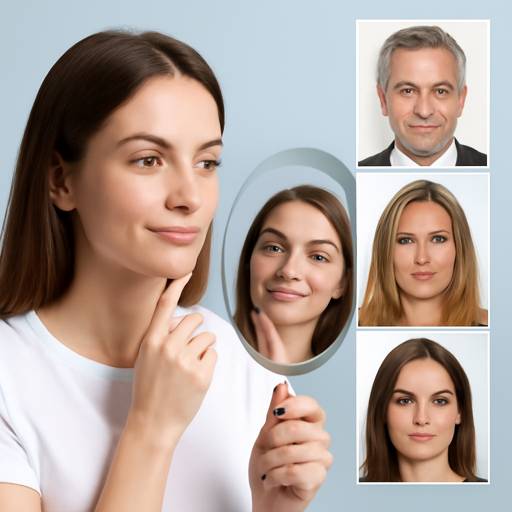
However, interpreting resemblance requires nuance. Perceived likeness can be influenced by hairstyle, makeup, expression, and clothing—context that alters the brain’s face-processing heuristics. Cultural familiarity plays a role as well: someone in Japan might see resemblances to local stars that a viewer in Brazil would not. Ethical considerations matter too; overly literal claims that equate ordinary people with public figures can lead to unwanted attention or misrepresentation. Responsible platforms encourage framing results as playful observations and provide controls for sharing and deleting images.
Ultimately, the popularity of searches for celebrities that look alike reflects a blend of identity play and social sharing. It can illuminate how people see themselves, highlight cross-cultural patterns of beauty, and create moments of delight when a surprising match appears.
Practical Tips, Case Studies, and Real-World Examples
Practical tips make look-alike tools more useful and accurate. For best results, choose a clear, front-facing photo with neutral expression and even lighting; remove heavy filters and extreme makeup that change facial geometry. Uploading multiple images that show different angles and expressions improves matching, since systems compare across a broader representation. Interpret confidence scores carefully: a high similarity indicates shared facial features but not identical identity. When sharing matches, crop images similarly so viewers can compare features side-by-side.
Real-world examples show how resemblance tools have been used creatively. A theater company once used a celebrity resemblance search to find local actors who naturally resembled historical figures for a biopic stage piece; the tool speeded casting and reduced time spent on makeup trials. In another case, a fashion brand tested campaign mockups by pairing models who resembled certain celebrities, achieving a lookalike vibe without costly endorsements. Social media influencers regularly run hashtag challenges where followers submit photos to discover which stars they resemble, generating high engagement and community interaction.
A case study highlights the importance of diverse datasets: an early look-alike service favored western celebrities because its training data lacked global representation, producing poor matches for users from underrepresented regions. After expanding the dataset and retraining models, match quality improved markedly, increasing user trust and adoption. This underscores why users should choose services that disclose dataset diversity and privacy policies.
For those asking “which celebs do I resemble?” or seeking a playful identity check like celebrity look alike comparisons, combining good photo practices with awareness of algorithmic limits yields the best experience. When used thoughtfully, these tools offer striking visual insights, fun social moments, and practical creative applications without overclaiming certainty about identity or lineage.

Casablanca native who traded civil-engineering blueprints for world travel and wordcraft. From rooftop gardens in Bogotá to fintech booms in Tallinn, Driss captures stories with cinematic verve. He photographs on 35 mm film, reads Arabic calligraphy, and never misses a Champions League kickoff.